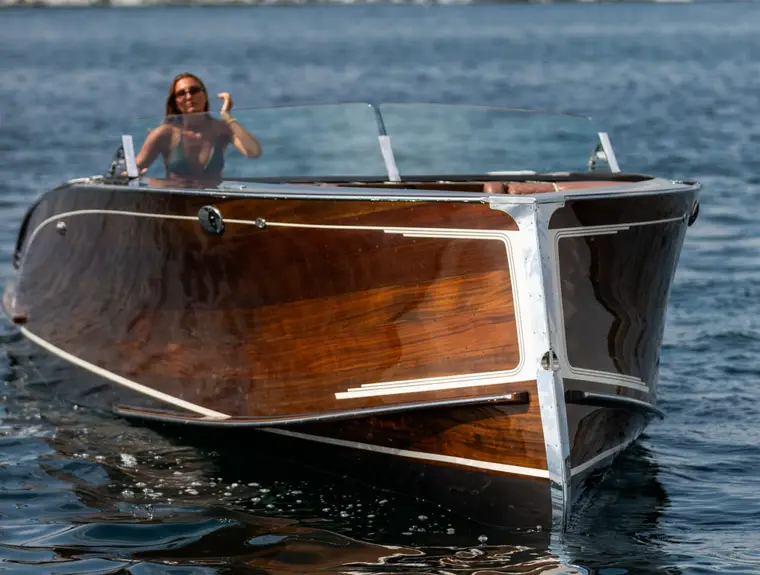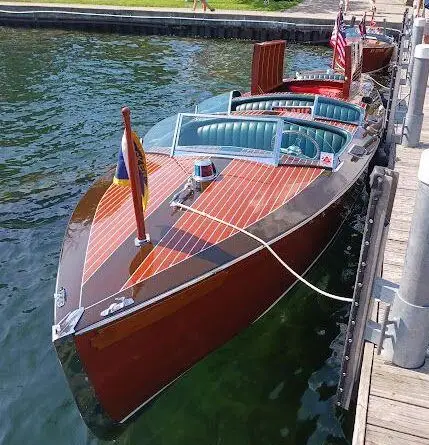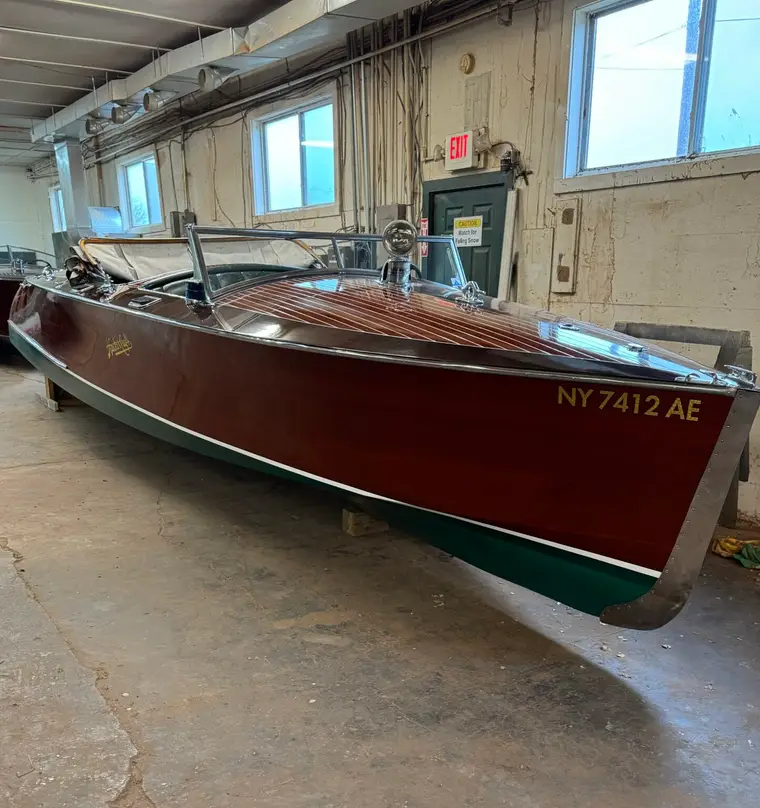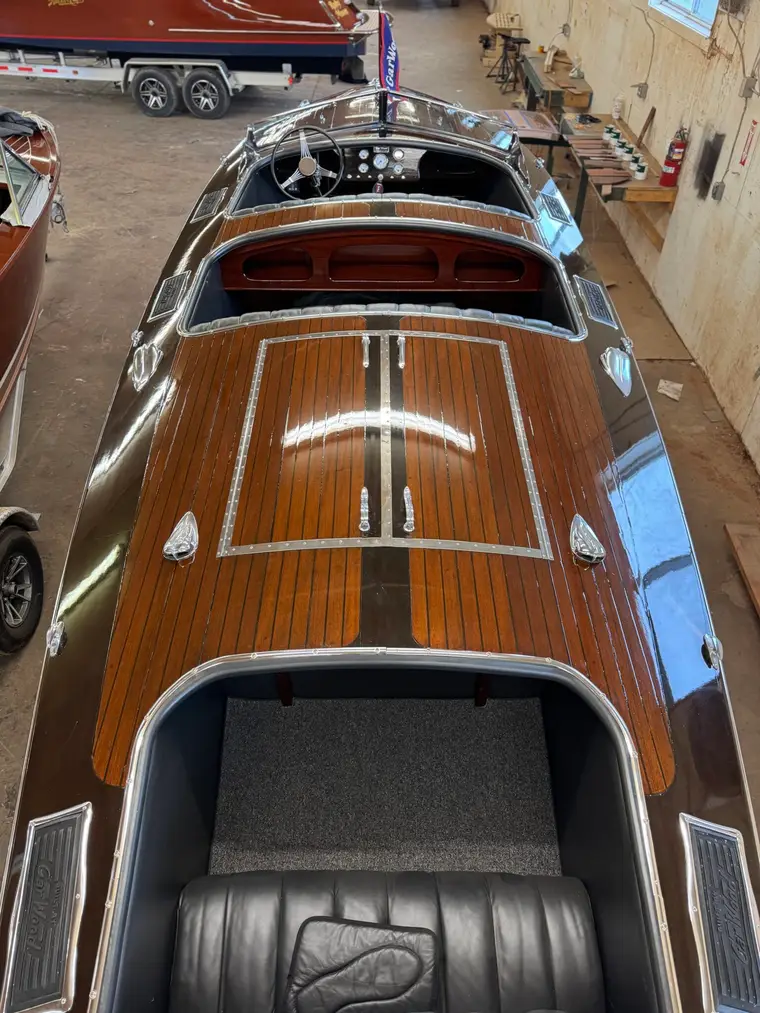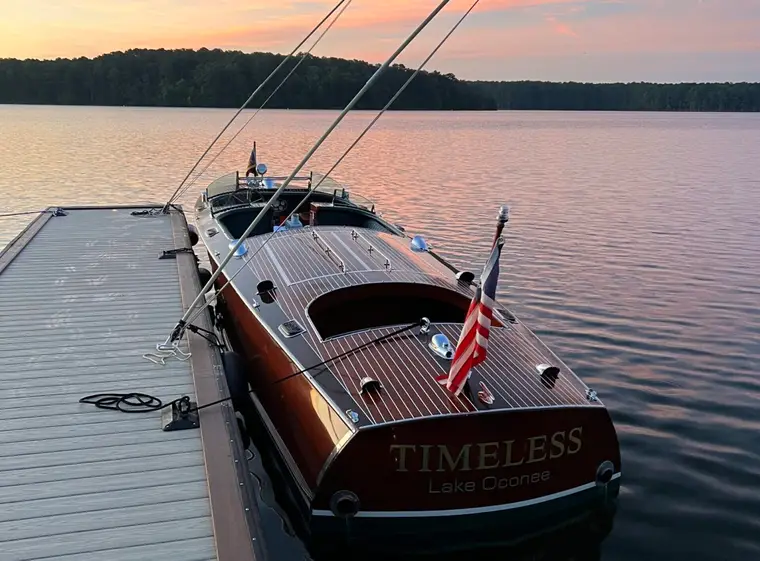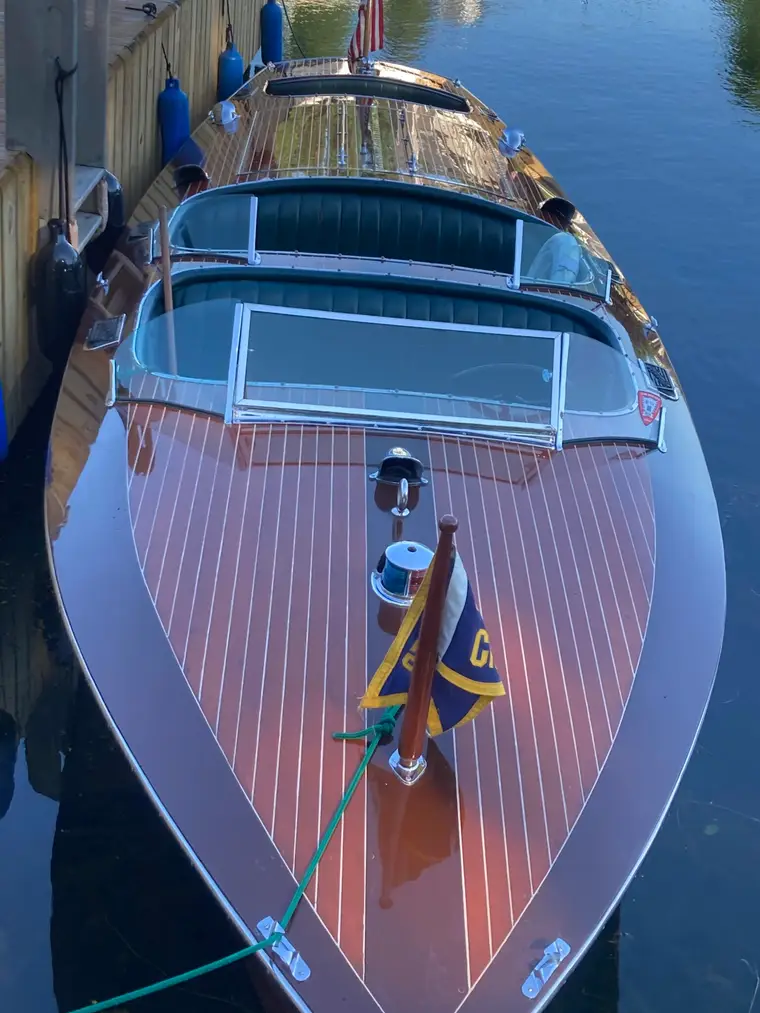
A triple cockpit runabout has three separate open cockpits along a long mahogany hull: one forward of the engine, then the driver's cockpit, then a rear passenger cockpit. Built mainly from the early 1920s to the mid-1930s, triple cockpits are the boats most people picture when they think of the golden age of American lake boating.
How the layout works
The engine sits amidships under hatches, between the forward cockpit and the driver. The driver sits well aft with a long view over the foredeck, and passengers ride in the forward and rear cockpits. The layout spread weight evenly for speed and kept passengers away from engine heat and noise.
Who built them
- Chris-Craft — by far the most numerous; see Chris-Craft triple cockpit.
- Hacker-Craft — refined, rarer boats; see Hacker-Craft triple cockpit.
- Gar Wood — powerful and highly collectable; see Gar Wood boats.
- Canadian builders — Ditchburn, Minett-Shields and other Muskoka yards.
Sizes and use
Most triple cockpits are 22 to 30 feet long and seat six to nine people. They are wonderful for lake cruising and boat shows. Their age means they need careful maintenance and dry storage, and many owners use them for shorter outings rather than all-day trips.
Values
Restored Chris-Craft triple cockpits commonly sell from around $75,000 to $125,000; rarer Hacker and Gar Wood boats and large customs can be worth considerably more. Project boats are cheaper but restoration is a major undertaking — see restoration costs.
Buying advice
Focus on structure — frames, keel, bottom and transom — before varnish. Confirm identification and history, review restoration records, check the engine and commission a specialist survey. Compare with later double cockpit runabouts, which are often easier to use.