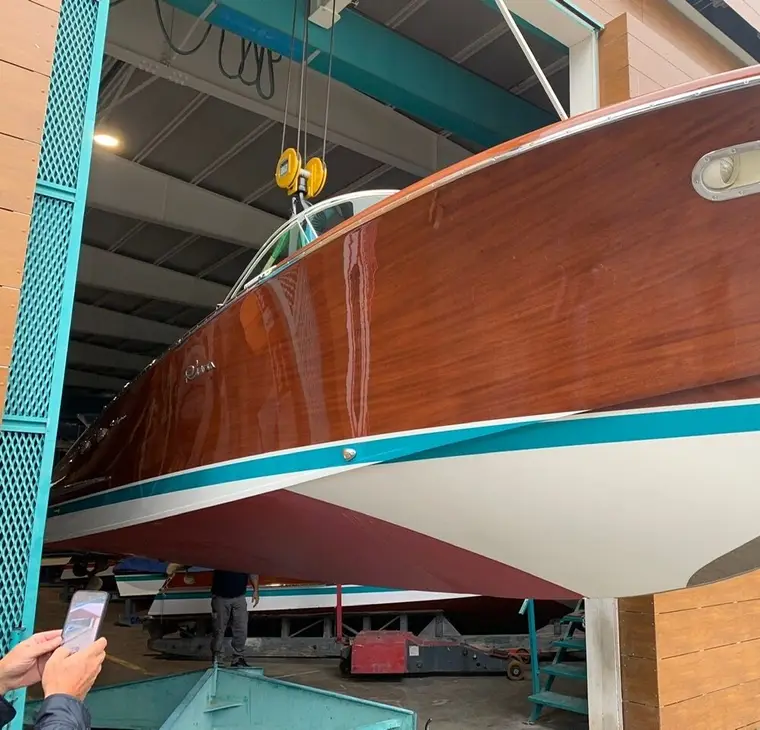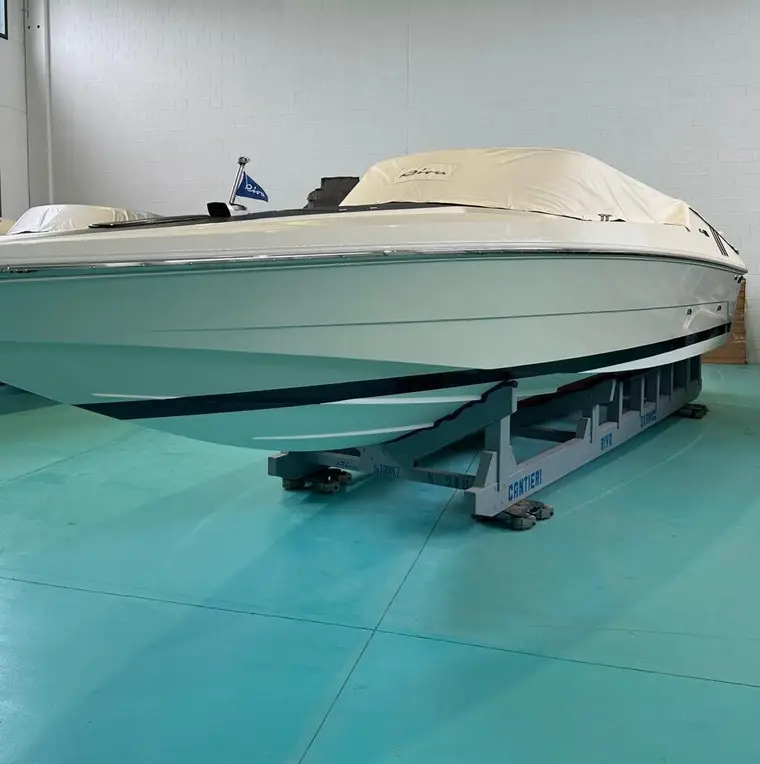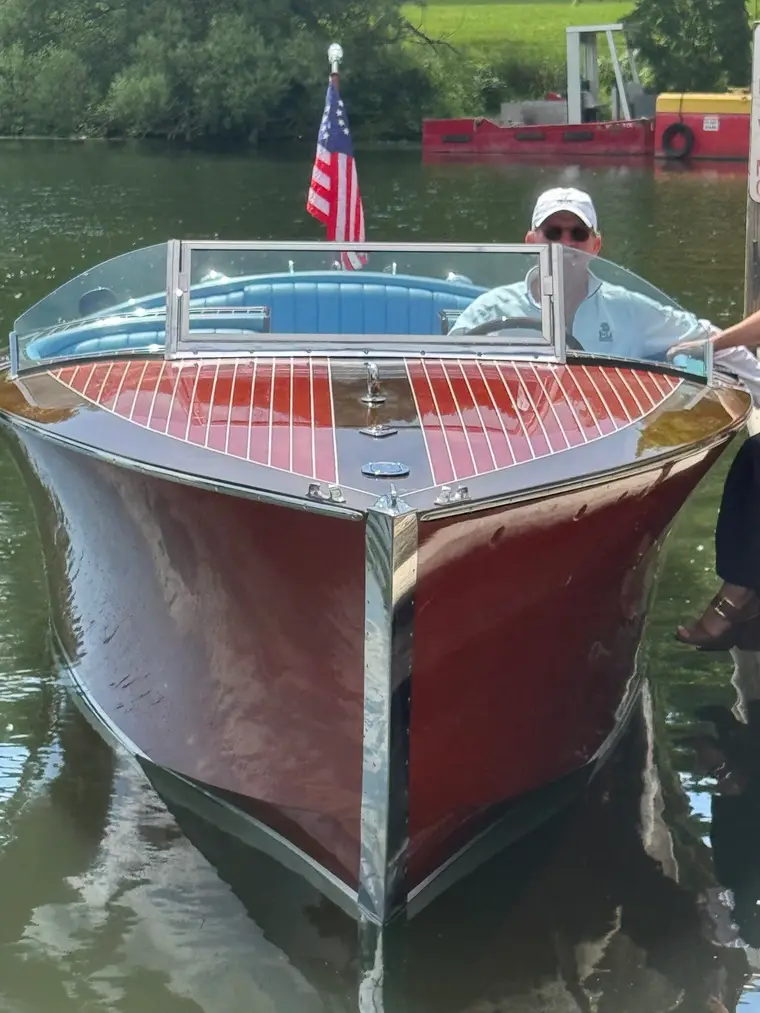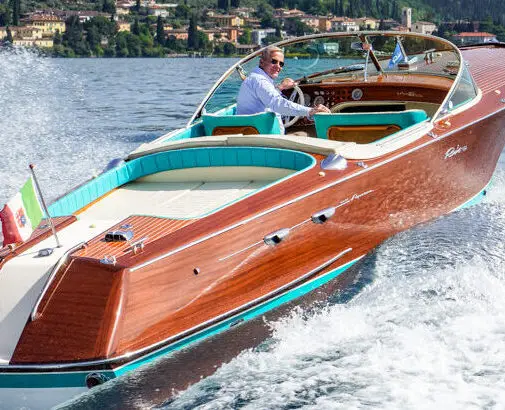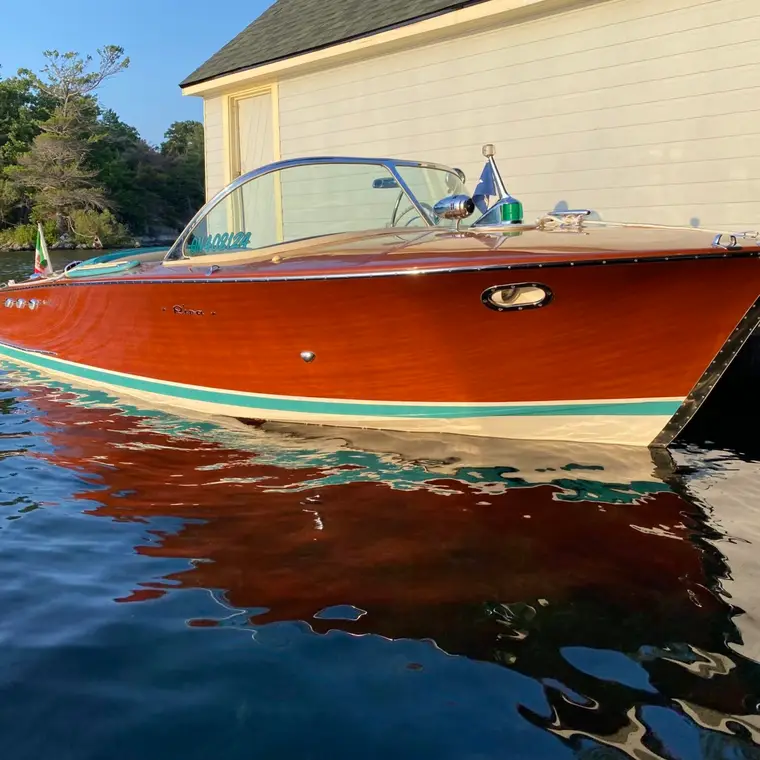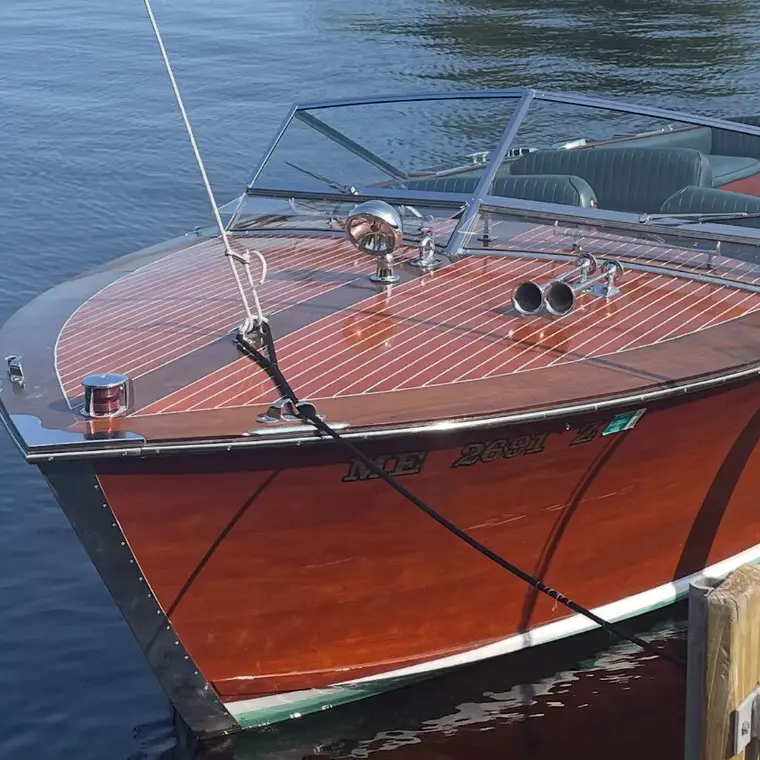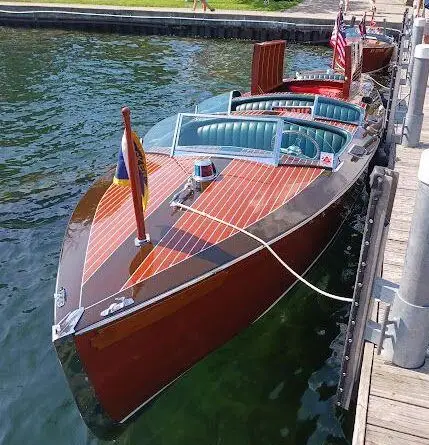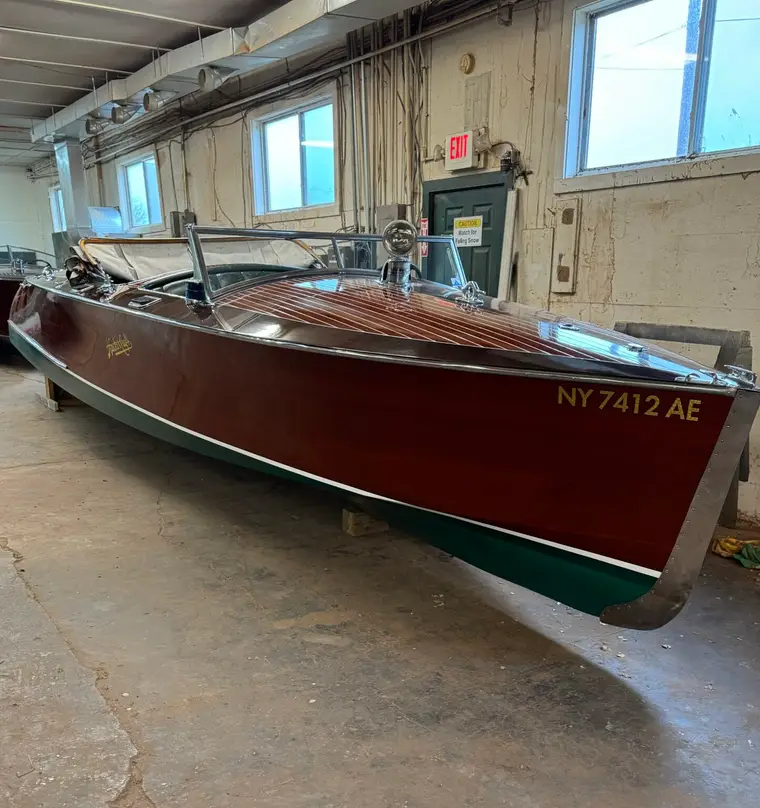
Double cockpit runabouts — often called split-cockpit runabouts — have two seating areas, usually a forward cockpit with the driver and a rear cockpit for passengers, with the engine between or behind them. From the 1930s onwards this layout replaced the triple cockpit and became the standard classic runabout.
Why the layout succeeded
Moving the driver forward improved visibility and made boats easier to handle, while the second cockpit kept space for passengers. Double cockpits are generally more practical than triple cockpits, with easier boarding and better use of space in a shorter hull.
Classic examples
- Chris-Craft — Deluxe runabouts, Rivieras, Capris and many more; see Deluxe runabout and Riviera.
- Hacker-Craft and Gar Wood — pre- and post-war runabouts.
- Century — sporty post-war runabouts such as the Resorter.
- Riva — the Ariston and other Italian runabouts; see Riva Ariston.
Sizes and use
Double cockpit runabouts range from about 16 to 24 feet. Smaller boats are easy to trailer and suit lakes of any size; larger ones offer more seating and performance for bigger water. They are excellent for lake cruising, picnics and, with enough power, waterskiing.
Values
Double cockpit runabouts span the widest range of values in the classic market, from affordable 1950s boats in the tens of thousands of dollars to rare pre-war customs and Italian icons worth much more. See classic boat values.
Buying advice
Inspect bottom, transom, frames and decks; check the engine and steering; confirm identification and history; and commission a survey. A sea trial will show how the boat handles and whether the engine runs cool and clean. Browse classic runabouts for sale.