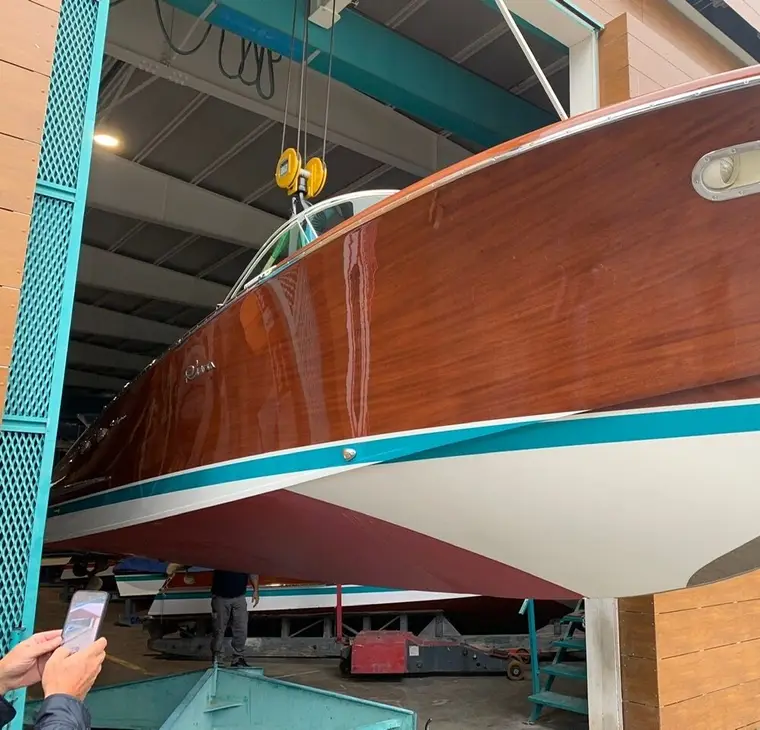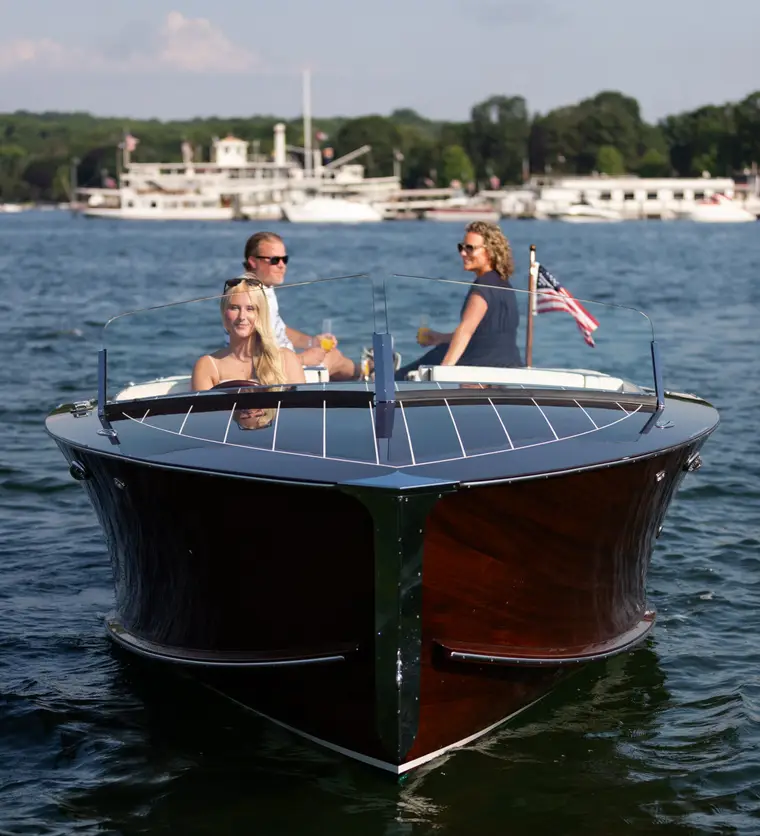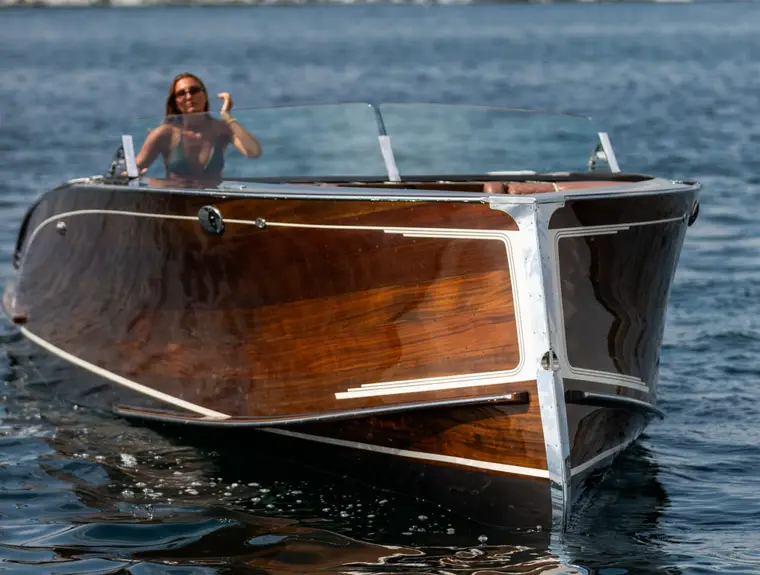
Nothing defines a classic boat like deep, glossy varnish over mahogany. Choosing the right varnish — and applying it well — makes the difference between a finish that glows for years and one that fails in a season.
Types of marine varnish
| Type | Strengths | Trade-offs |
|---|---|---|
| Traditional one-part (oil-based, tung or linseed with alkyd or phenolic resins) | Deep warm colour, easy to apply and repair, flexible | Needs more coats and regular maintenance |
| One-part urethane-modified | Harder, more abrasion resistant | Can be harder to repair invisibly |
| Two-part polyurethane clear | Very hard and durable, high gloss | Less forgiving, harder to touch up, needs careful prep |
Well-known marine varnish ranges include products from Epifanes, Pettit, Interlux, Awlwood and others. Many restorers stick with one system throughout a boat for compatibility.
UV protection matters
Sunlight breaks down varnish and darkens wood. Choose a varnish with good UV absorbers, especially for boats used in strong sun, and keep the boat covered when not in use.
How many coats?
On bare wood, restorers commonly build up many coats — often eight to twelve or more — sanding between coats, to achieve depth and protection. Maintenance coats are then added each season. Mahogany is often stained and filled before varnishing to give an even colour and a smooth surface.
Application tips
- Work in a warm, dry, dust-free space, out of direct sun.
- Sand carefully between coats and remove all dust.
- Use a quality brush and thin coats; follow the maker’s thinning advice.
- Respect recoat times and temperature ranges.
Maintenance
Inspect varnish every season, repair dings quickly and apply maintenance coats before the finish breaks down. See mahogany boat care and wooden boat maintenance.