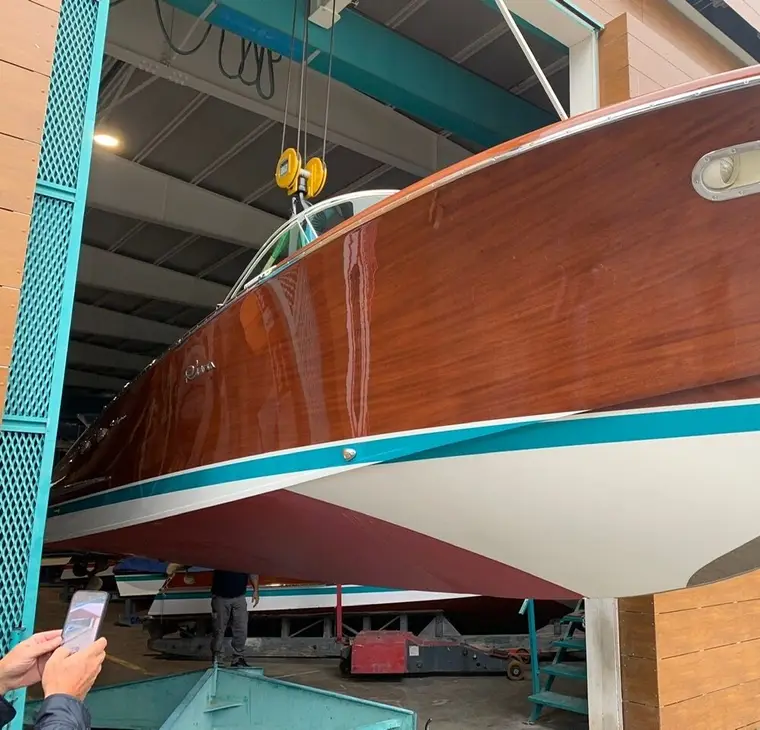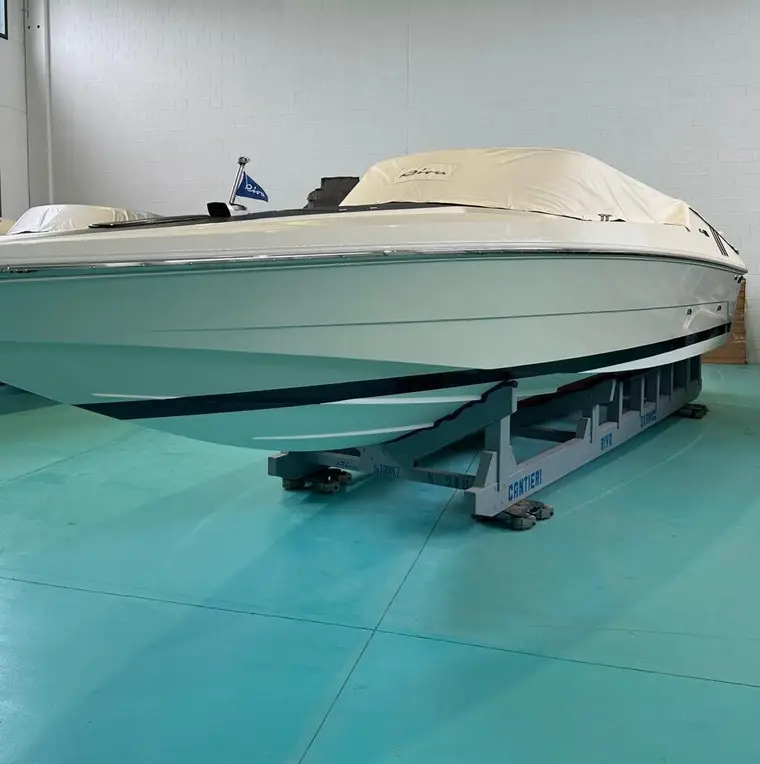
How you store a wooden boat over winter matters more than almost anything else for its long-term health. The goal is simple: keep it dry, ventilated, well supported and protected from extremes.
Indoor or outdoor?
| Option | Pros | Cons |
|---|---|---|
| Heated indoor storage | Best protection; allows winter work | Most expensive; very dry heat can over-dry planks |
| Unheated indoor storage | Protects from weather; good value | Freezing temperatures require winterising |
| Outdoor under a cover or shed | Lowest cost | Risk from rain, snow, wind and UV |
Humidity and ventilation
Wooden boats prefer stable humidity. Very dry, heated air can shrink planks and open seams; damp, unventilated spaces encourage mould and rot. Covers should be breathable, and the boat should be able to air out.
Support
Use a well-fitted trailer or cradle that supports the hull at the keel and bunks or pads in the right places. Poor support can distort hulls over a winter.
Winterising checklist
- Clean, dry and air the boat inside and out.
- Winterise the engine: change oil, drain or protect the cooling system, fog cylinders and stabilise fuel — see classic boat engines.
- Remove or maintain batteries.
- Remove cushions and electronics to dry storage.
- Cover with a breathable cover.
Spring
Inspect, refresh varnish, service the engine and launch carefully, allowing dry planks to take up. See wooden boat maintenance. In cold regions such as Michigan and Minnesota, book storage early. Check your insurance covers storage.