Understanding how a wooden boat is built helps you judge its condition, maintenance needs and value. Classic boats use several construction methods, each with its own strengths and weaknesses.
Main construction methods
- Carvel — planks laid edge to edge over frames, giving a smooth hull; seams may be caulked.
- Lapstrake (clinker) — each plank overlaps the one below, creating a strong, light hull; used by Lyman and Chris-Craft Sea Skiffs.
- Double-planked — two layers of planking, often with fabric or bedding between; common on classic American runabout bottoms.
- Batten seam — planks joined over longitudinal battens behind the seams.
- Plywood — used in many post-war boats; light and strong if kept dry.
- Strip-plank and cold-moulded — modern methods using glued strips or layers of veneer with epoxy, used in new classic-style boats and some restorations.
Woods
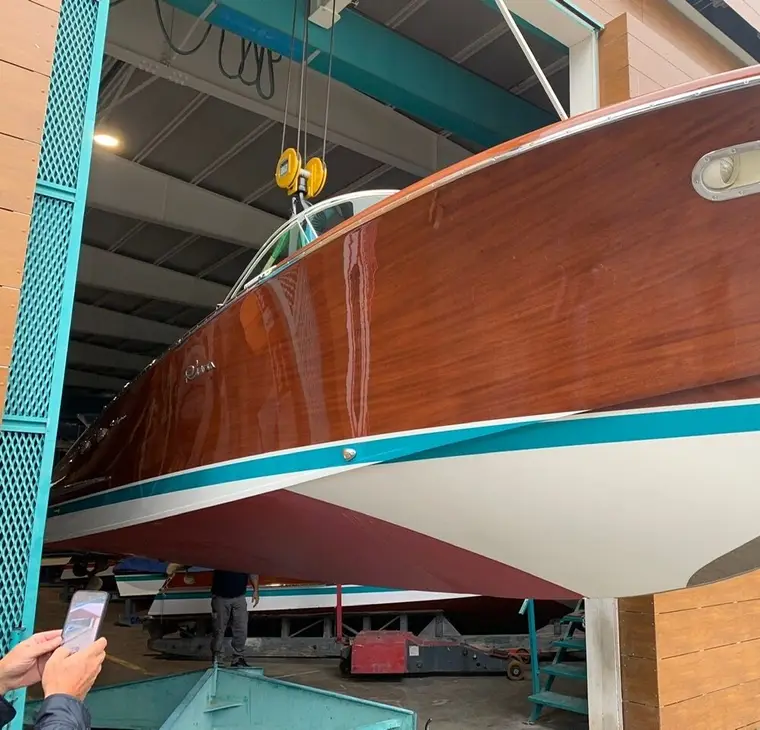
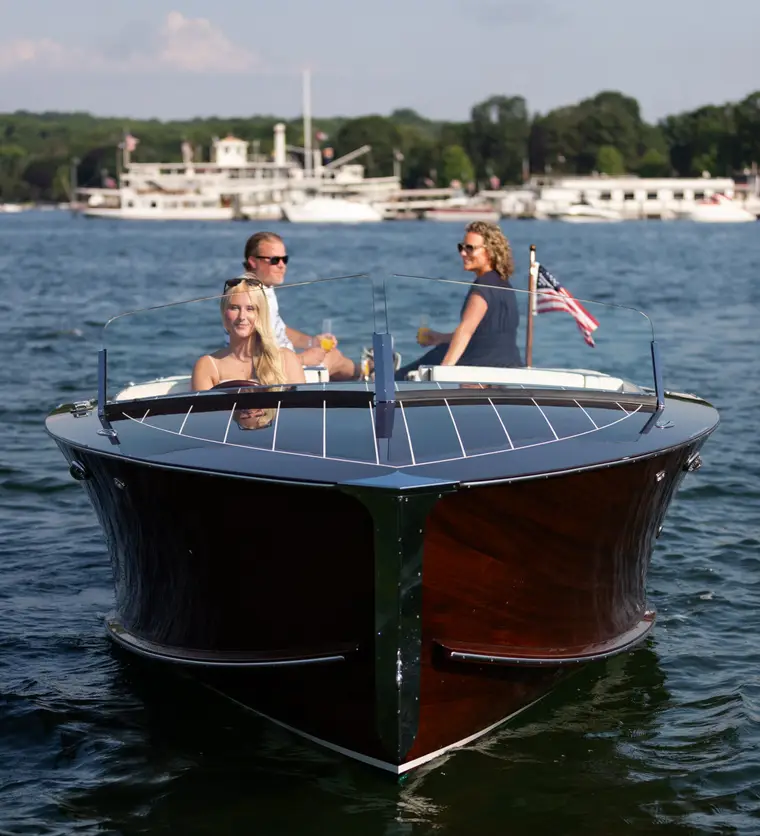
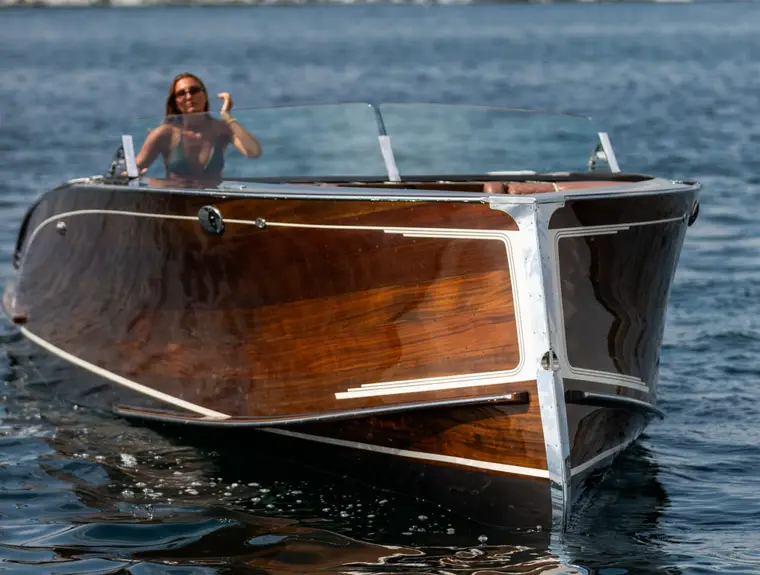
Mahogany is the classic choice for planking and decks thanks to its stability, strength and beauty. Oak is common for frames and keels. Teak is used for decks and trim on larger boats, and cedar for lightweight planking. Original wood species matter for authentic restoration.
Fastenings
Classic boats are fastened with bronze or copper screws, rivets and bolts, sometimes galvanised or steel in less expensive boats. Fastenings can deteriorate over time, so refastening is a common restoration task.
Modern bottoms
Many restored runabouts have replacement bottoms using modern marine adhesives and sealants, which reduce leaks and maintenance. Purists prefer traditional methods; buyers should know what has been done. See classic boat restoration.
Why it matters when buying
Construction affects how the boat ages, what can go wrong and what repairs cost. A specialist survey will assess the method and its condition.