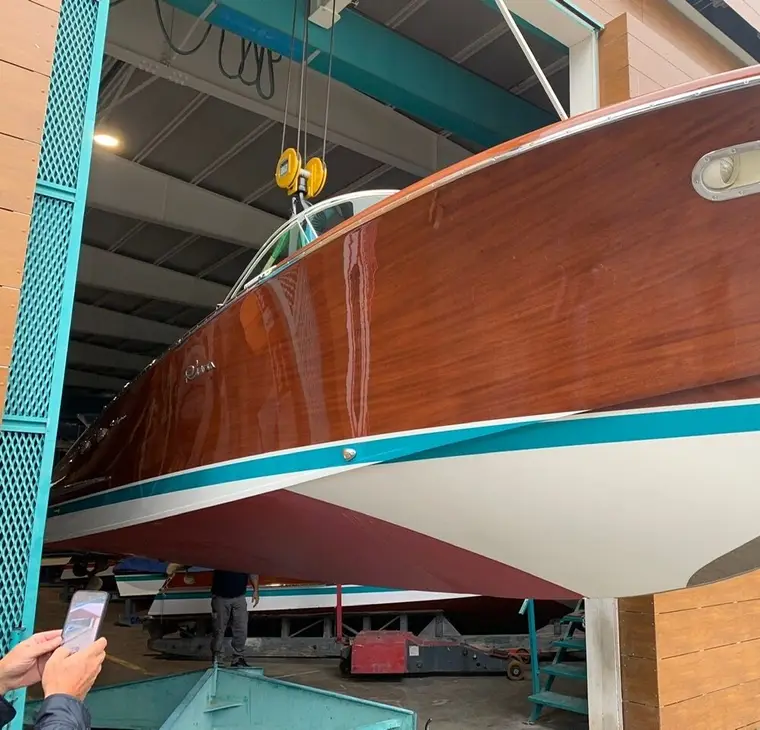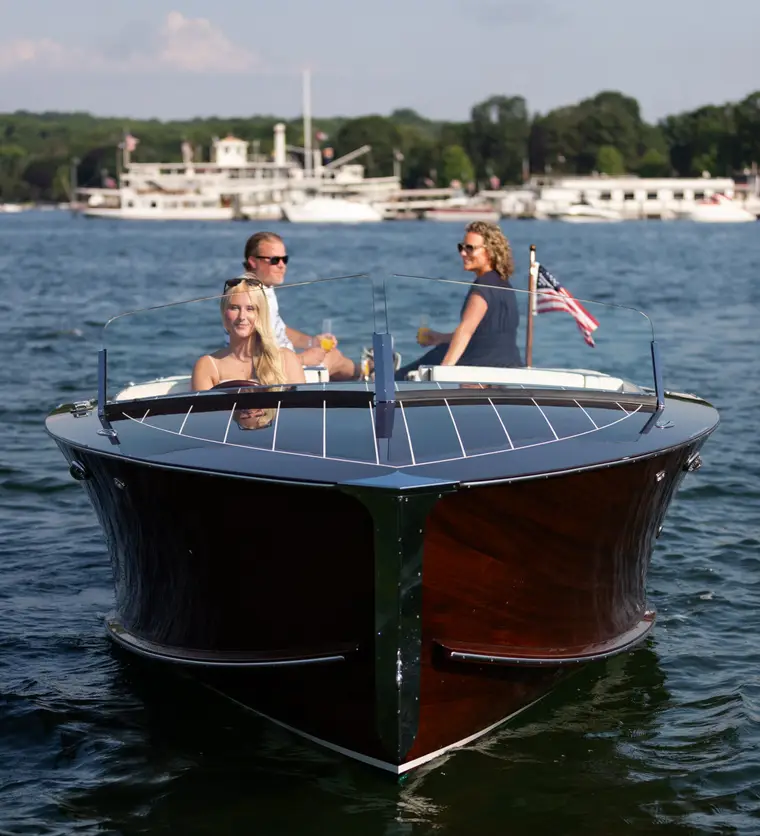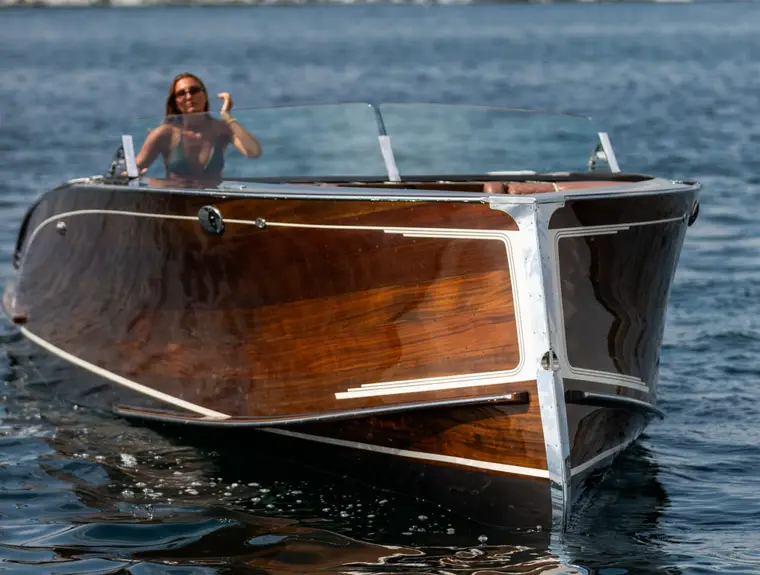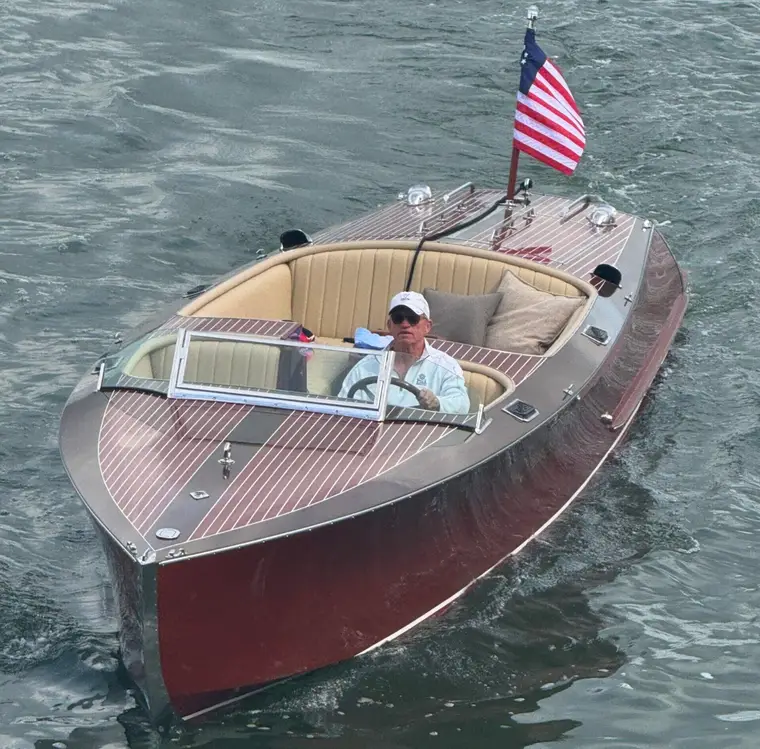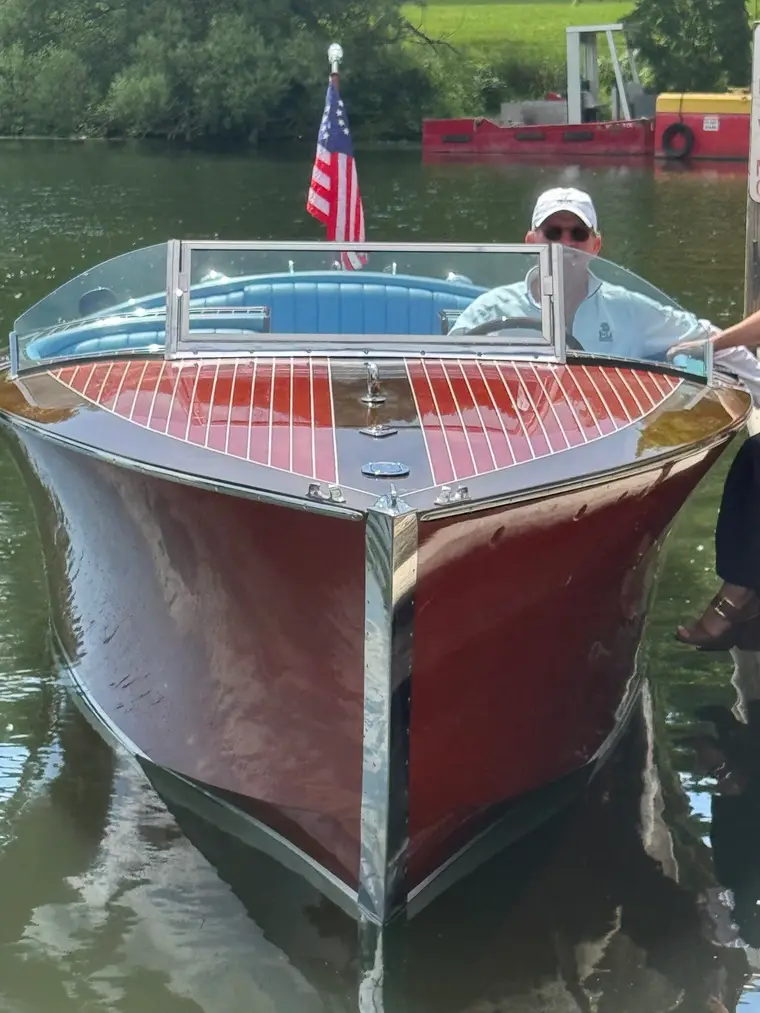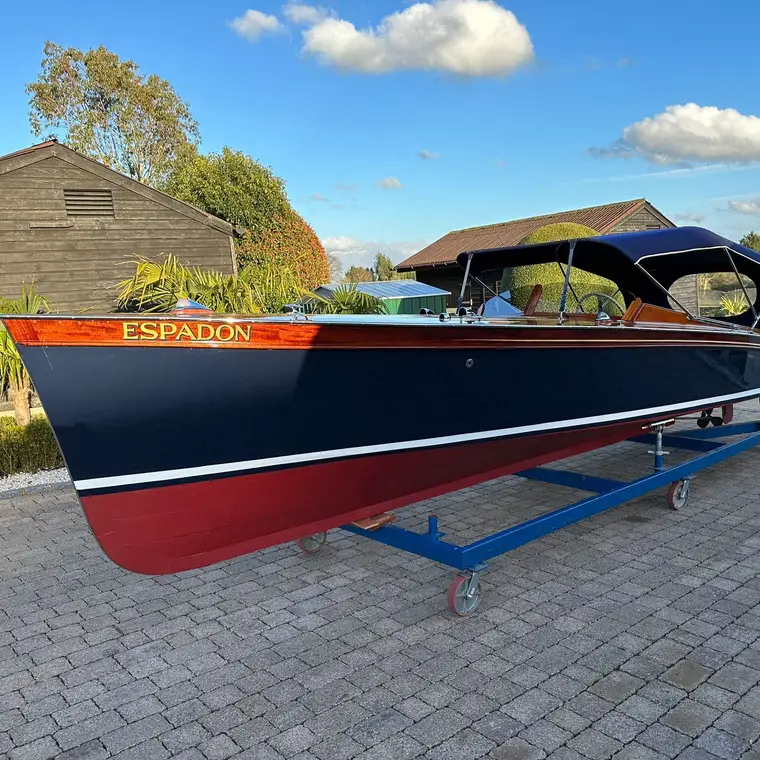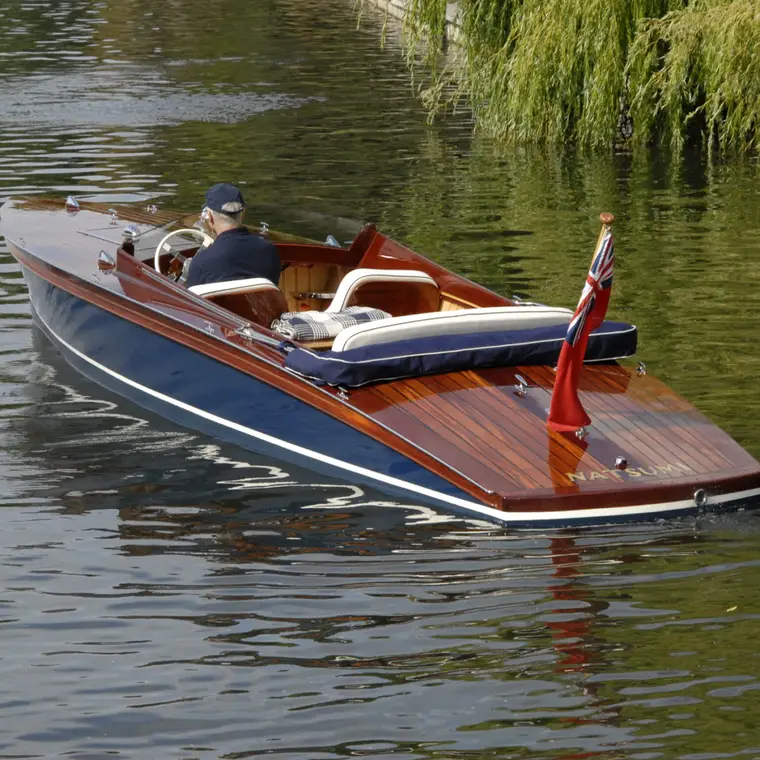
Few things on the water compare with a wooden boat. The warmth of varnished mahogany, the sound of a V8 through a wooden hull and the way a well-built runabout settles into the water are why people still seek out wooden boats for sale a century after the first mahogany speedboats appeared on American and European lakes.
Types of wooden boats on the market
Wooden boats for sale fall into a few clear families, and knowing which one suits you narrows the search quickly.
- Runabouts — the classic open boats with forward and aft cockpits, from 17-foot Chris-Craft Deluxe models to 30-foot triple cockpits. See wooden runabouts for sale.
- Italian speedboats — Riva, Boesch, Pedrazzini and other European builders produced faster, sleeker boats with a distinctive style. See Italian wooden boats.
- Launches — displacement boats designed for calm rivers and lakes, such as Thames slipper launches and electric launches.
- Wooden yachts and sailboats — larger cruising and sailing vessels built in timber, from gaff cutters to classic motor yachts.
- Modern wooden boats — newly built boats from yards such as Hacker-Craft, StanCraft and Grand Craft, using traditional methods with modern engines.
Plank-on-frame, cold-moulded or modern composite?
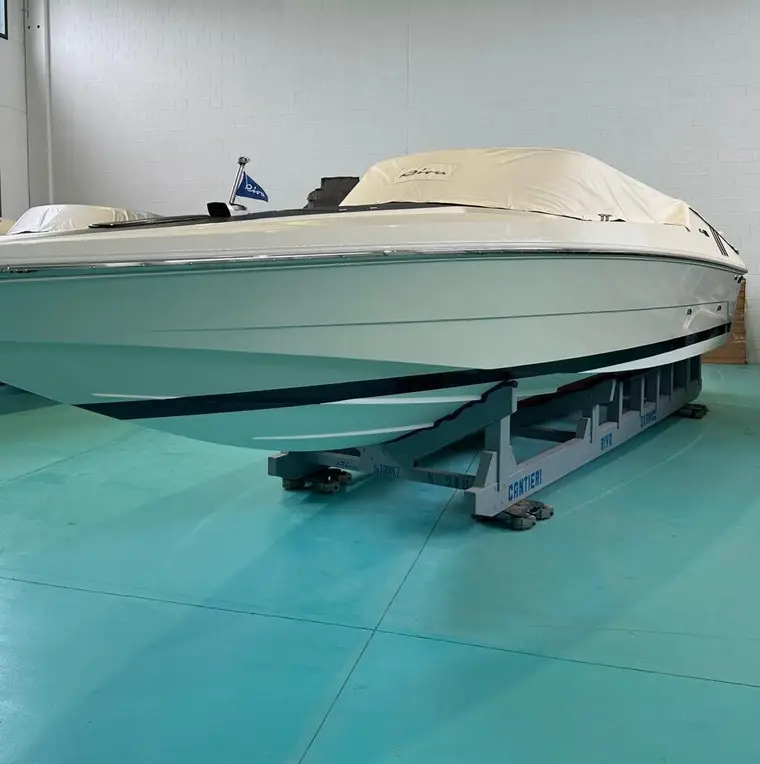
The way a wooden boat is built affects maintenance, value and how it behaves. Traditional plank-on-frame boats, including most pre-1970 runabouts, use mahogany planking over oak or mahogany frames, often double-planked with a canvas or fabric layer between. Cold-moulded boats laminate thin layers of wood with epoxy to create a stiff, watertight monocoque, which is how many modern classic-style runabouts are built. Some later Rivas and other classics use fibreglass hulls with wooden decks or trim. Our guide to wooden boat construction explains the differences in detail.
What to check before buying a wooden boat
Wood is forgiving and repairable, but problems hidden under varnish can be expensive. Before committing, look at:
- Bottom and frames — soft spots, fastener corrosion and previous repairs below the waterline.
- Transom and chines — common areas for rot where fresh water collects.
- Varnish quality — deep, even varnish suggests good care; lifting or grey patches indicate water getting under the finish.
- Engine and drive — hours since rebuild, cooling system condition and how the boat runs at speed.
- Documentation — hull numbers, restoration invoices and ownership history.
A specialist wooden boat survey is the best money you will spend before buying.
How much does a wooden boat cost?
Small wooden runabouts needing work can be found for modest sums, but well-restored classics are a serious investment. As a guide, restored American runabouts commonly trade from around $60,000 to $200,000 depending on model, length and originality, while Italian icons such as the Riva Aquarama sit at the top of the market. New-build wooden runabouts from American yards are generally priced from around $400,000 for a 26 to 29-foot boat with modern power.
Living with a wooden boat
A wooden boat asks for regular attention: a fresh coat of varnish when needed, dry winter storage, bilge checks and sensible use. In return it will often outlast its owners and hold its value far better than a production fibreglass boat. Read our wooden boat maintenance guide for a season-by-season plan.
Browse our current wooden boats for sale, or tell us what you are looking for and we will search our network for you.